


Blog: medical secretary and specialist practice resources
Practical articles on running a specialist practice in Australia, from Medicare billing and referral management to hiring and training a medical secretary.

The January Referral Pile-Up: How Specialist Practices Can Start 2027 Ahead
The January Referral Pile-Up: How Specialist Practices Can Start 2027 Ahead
You close for Christmas with all patient issues followed up. You come back in January to an inbox full of referrals, voicemails and patients who have been waiting since before New Year to hear back.
Sound familiar? For many specialist practices, the first fortnight back to work in January is the busiest of the year. Not because of the patients, but because of everything that piled up while the practice was shut.
The good news is that most of the pile-up is predictable. With a little planning in December, you can walk back into an organised practice instead of a backlog.
Why the January pile-up happens
Your practice might stop for the holidays, but the rest of the health system doesn't stop with you.
GPs keep referring. Many general practices stay open or reopen early, so referrals keep landing by fax, secure messaging and email.
Patients keep calling. Questions about results, appointments and scripts all wait in the voicemail until someone is back.
Loose ends in December. Recalls, follow-ups and billing often slip in the end-of-year rush.
Everyone returns on the same day. The whole team spends the first week catching up instead of booking.
The result? Urgent referrals sitting unread among routine ones, slower replies to referring GPs, and a diary that takes weeks to get back on track.
Step 1: Lock in your dates and tell everyone
The earlier your closure dates are set, the easier everything else becomes. Once you know them, update:
your phone message and on-hold message
your website and Google Business Profile
your email auto-reply
Every message should say when you're back and what patients should do in an emergency. It saves a lot of confused calls in January.
Step 2: Clear the decks before you close
The more you finish in December, the less is waiting for you in January. Before the practice closes, aim to:
triage every outstanding referral and book the urgent ones
book January and February appointments, so patients have a date
send recalls and follow-up reminders that are due early in the new year
chase outstanding pathology and radiology results
finalise Medicare, ECLIPSE and health fund claims
clear the dictation backlog, so no letters are sitting unsent over the break
Step 3: Use the time while you are away to keep getting the admin jobs done
This is where a remote medical secretary can make a real difference.
AIR SECRETARY closes at close of business on Thursday 24 December 2026 and reopens on Monday 4 January 2027. But many clinics close earlier than 24 December or reopen later than 4 January. On those days your clinic is quiet, but your Air Secretary can still be working, and they can focus on whatever work you've assigned.
Here's how that might look for a practice that closes on Friday 18 December and reopens on Monday 11 January:
Dates | Your Clinic | Your Air Secretary |
Mon 21 to Thu 24 December | Closed | Working: finishing dictation, confirming January bookings, finalising billing |
Fri 25 December to Sun 3 January | Closed | AIR SECRETARY closed |
Mon 4 to Fri 8 January | Closed | Working: sorting new referrals by urgency, checking messages, booking patients |
Mon 11 January | Open | The doctors walk back into an organised diary |
Instead of spending the first week back catching up, your doctors start the year with referrals prioritised for their review and patients already booked.
The key is to plan the work before you close. Write a simple task list for those days, set out what your secretary can do and what needs a doctor's sign-off and how you'll stay in touch if something urgent comes up.
What your Air Secretary can work on while the clinic is closed
If you're not sure what to hand over, these tasks can all be completed while you are away:
Referral triage and urgency prioritisation, ready for the doctor to review
Theatre list coordination for the first procedural lists of the year
Dictation and transcription, entered into your practice software
Medicare and ECLIPSE billing, including health fund reconciliation
Marketing to ensure that you keep up to date with your social media
Step 4: Plan your first week back
Even with the decks cleared, the first week back is busier than usual. A few simple moves help:
Leave catch-up time in the diary on day one, rather than booking a full list.
Review urgent referrals first, then return calls to referring GPs.
Hold a short team huddle to agree priorities for the week.
Does January always feel like this?
If the start of every year feels like a scramble, it may be a sign your practice needs more admin support all year round, not just at Christmas.
Every Air Secretary works exclusively for one practice. They're trained in the Australian healthcare system before they start, work from our supervised office in Dumaguete, Philippines and are supported by a dedicated team lead. The earlier you start the conversation, the sooner your secretary can be trained and ready for 2027.
Download our free eBook, 7 Insider Secrets to Employing Remote Medical Secretaries, for a practical guide to getting remote support right.
Book a call with our team before we close on 24 December, or from 4 January when we're back, and we'll talk you through how it works.

FREE PRACTITIONER RESOURCE
Optimise Your Practice.
Download The eBook.
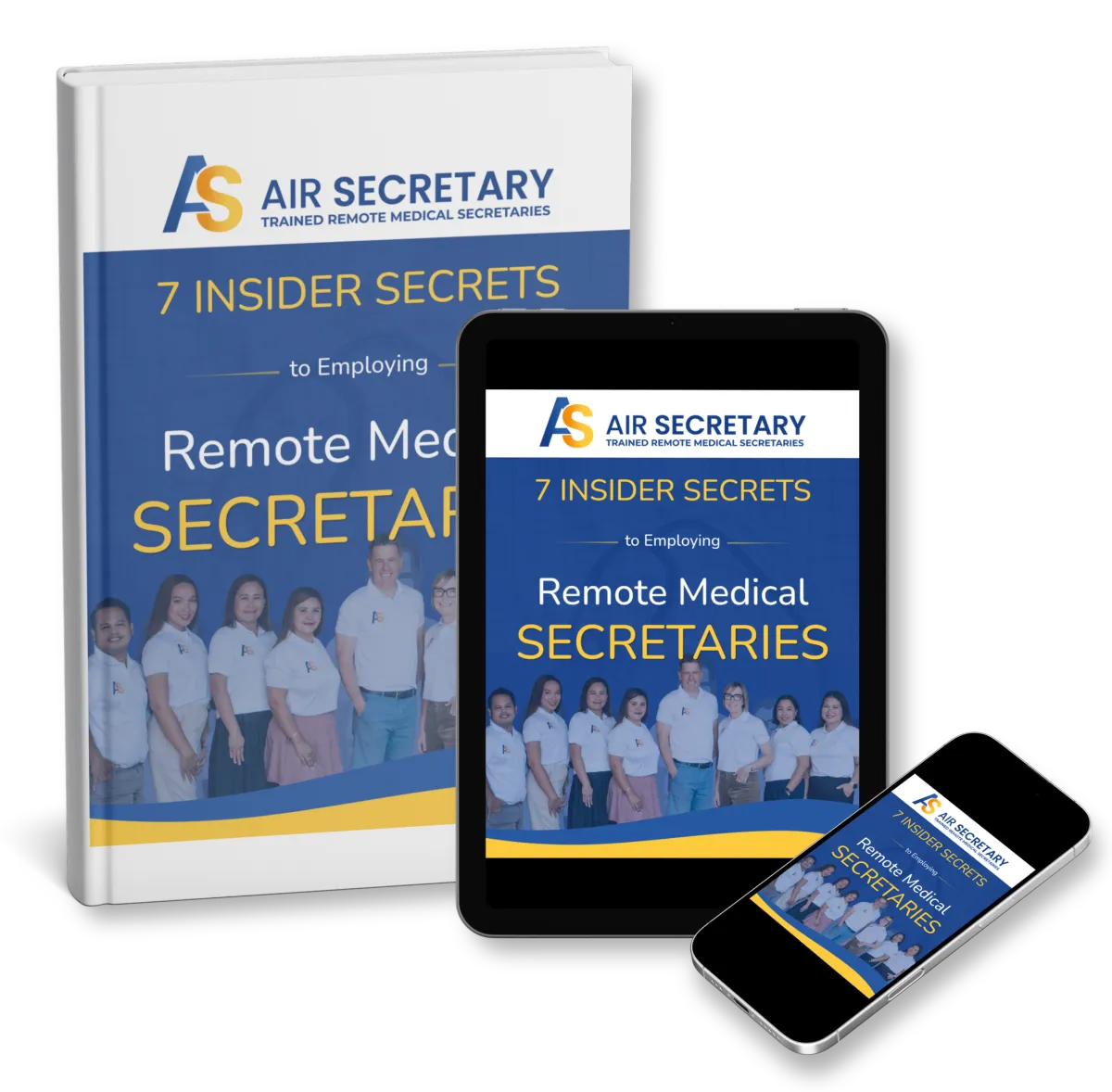
Written specifically for Australian medical specialists, surgeons, and clinic directors. Discover proven clinical workflow frameworks, patient intake automation protocols, and billing compliance safeguards designed to eliminate operational friction.
AIR SECRETARY connects Australian specialist doctors with dedicated remote medical secretaries based in the Philippines — recruited, trained, and managed so you save time and reduce costs.